
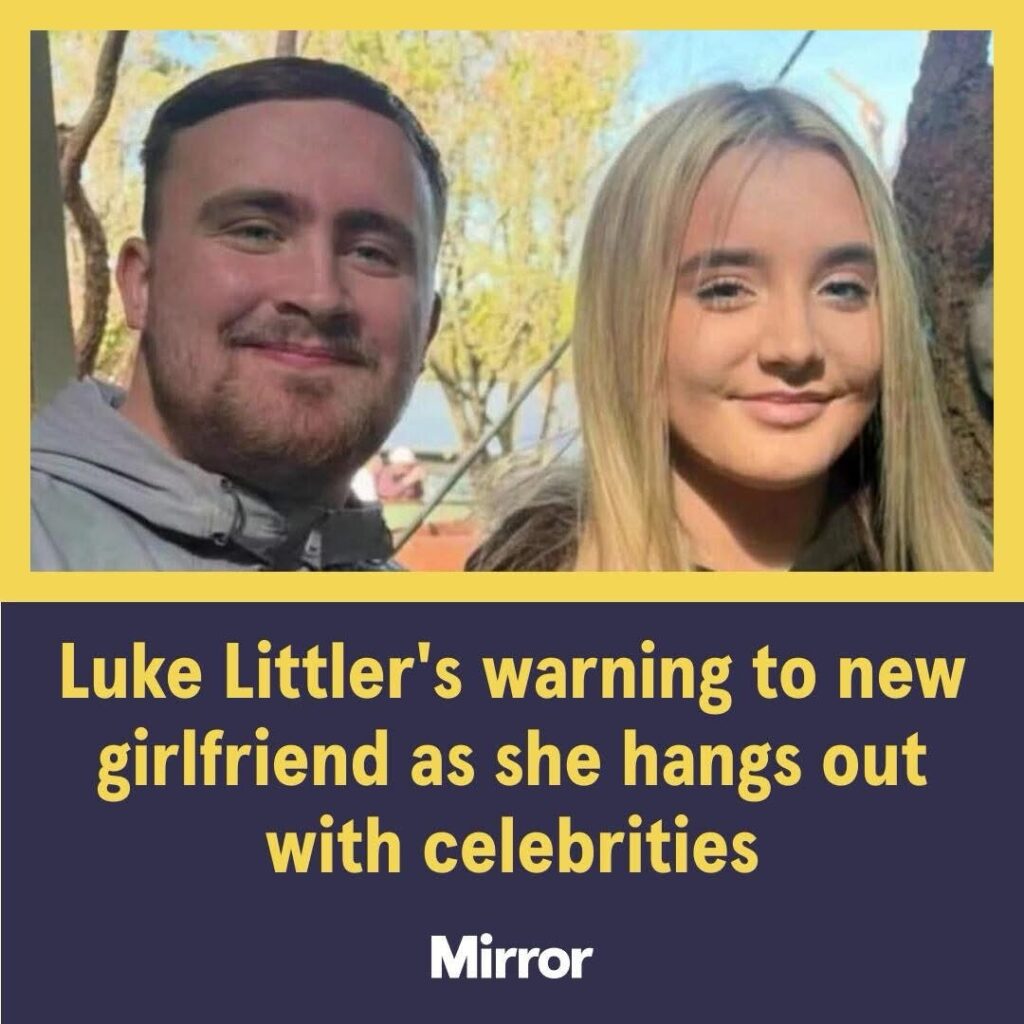
The darts world has been thrown into absolute turmoil as teenage sensation Luke Littler finds himself at the centre of a rapidly escalating privacy controversy that has split fans, rattled insiders, and sent shockwaves through the Professional Darts Corporation (PDC).
What began as whispers in online forums has exploded into a full-blown storm, with claims circulating that private hotel footage involving Littler and Faith Millar was improperly accessed and shared among members of the darts community. While no verified video has been publicly released, the mere allegation has been enough to ignite outrage, speculation, and an intense debate about player privacy, media ethics, and the dark side of fame.
As Littler’s name trended across social media platforms, one thing became painfully clear: this was no longer just about darts.
From Rising Star to Trending Topic Overnight
Luke Littler’s rise has been nothing short of meteoric. Tipped as one of the most gifted talents of his generation, he has become a fan favourite for his composure on the oche and his maturity beyond his years. But with fame comes scrutiny — and in this case, scrutiny turned invasive.
According to multiple unverified accounts circulating online, a hotel stay linked to a recent darts event became the focal point of the controversy. Claims suggested that private moments were compromised due to an alleged breach of professional boundaries, with fingers pointed at hotel staff for failing to uphold confidentiality.
It’s important to stress: no official confirmation has been made regarding the existence of any footage, and no credible media outlet has published such material. Yet the damage, many argue, was already done.
In today’s digital age, rumour alone can feel like a verdict.
Darts Community Reacts: Shock, Anger, and Division
The darts community did not take the situation lightly.
Some fans expressed outrage, not at Littler, but at what they described as a “gross invasion of privacy.” Others questioned how young athletes are protected while travelling on tour, particularly when staying in hotels shared with staff, fans, and media.
“If this can happen to Luke Littler, it can happen to anyone,” one fan wrote.
“This isn’t sports gossip — this is a serious breach of trust.”
However, not everyone saw it the same way.
A vocal minority demanded clarity, calling for statements from all parties involved and accusing Littler’s camp of “going silent.” This divide only added fuel to the fire, with speculation multiplying by the hour.
Faith Millar Pulled Into the Spotlight
Faith Millar, whose name became linked to the alleged incident through online chatter, was suddenly thrust into an unwanted spotlight. With little verified information available, supporters were quick to call for restraint, urging the public to avoid dragging private individuals into a storm driven largely by conjecture.
Advocates stressed the importance of responsible discussion, warning that careless narratives could cause lasting harm.
“Two people’s reputations are being discussed based on nothing more than online noise,” a commentator noted. “That should concern everyone.”
Silence, Statements, and Strategic Moves
As the controversy grew, attention turned to Luke Littler’s team and the PDC.
While no detailed public statement was immediately released, sources close to the situation suggested that legal and professional advice was being sought behind the scenes. In situations involving alleged privacy breaches, silence is often strategic — but to fans, it can feel unsettling.
The PDC, known for tightly managing its public image, reportedly began internal discussions around player welfare and accommodation security. Though no official announcement has been made, insiders claim the organization is “taking the matter seriously.”
The Bigger Issue: Fame, Youth, and Vulnerability
Beyond the headlines lies a deeper, uncomfortable question:
Are young sports stars adequately protected in an era where privacy is fragile and virality is ruthless?
Luke Littler is still early in his career, navigating global attention that many seasoned professionals struggle to manage. Critics argue that governing bodies must do more to safeguard players, especially younger ones, from situations where boundaries can be crossed — intentionally or otherwise.
This incident, alleged or not, has reopened discussions about:
- Hotel security and staff confidentiality
- Social media accountability
- Mental health support for athletes
- The responsibility of fans and content creators
Social Media: The Court of Public Opinion
Perhaps the most damaging aspect of the saga has been the unchecked spread of speculation online.
Hashtags trended. Screenshots — some real, many fabricated — circulated widely. Commentary videos racked up thousands of views, often prefaced with “allegedly” but delivered with certainty.
Once again, social media proved to be a double-edged sword: a place of community, but also a courtroom where evidence is optional and judgement is instant.
What Happens Next?
As of now, the situation remains unresolved.
No official confirmation.
No verified footage.
No formal accusations.
Yet the tension lingers.
Will statements be issued to shut down the rumours?
Will the PDC introduce stricter protocols for player privacy?
Or will this story quietly fade — leaving behind reputational scars and unanswered questions?
One thing is certain: the darts world will not forget this quickly.
Final Thoughts: A Moment That Changed the Conversation
Whether the claims prove baseless or not, this episode has already left a mark on the sport. It has forced uncomfortable conversations, exposed vulnerabilities, and reminded fans that behind the walk-on music and televised glory are real people deserving of dignity and privacy.
For Luke Littler, the focus now will be on returning to what he does best — letting his darts do the talking. But the echoes of this controversy will likely follow him, at least for a while.
And for the darts world as a whole, the message is loud and clear: