
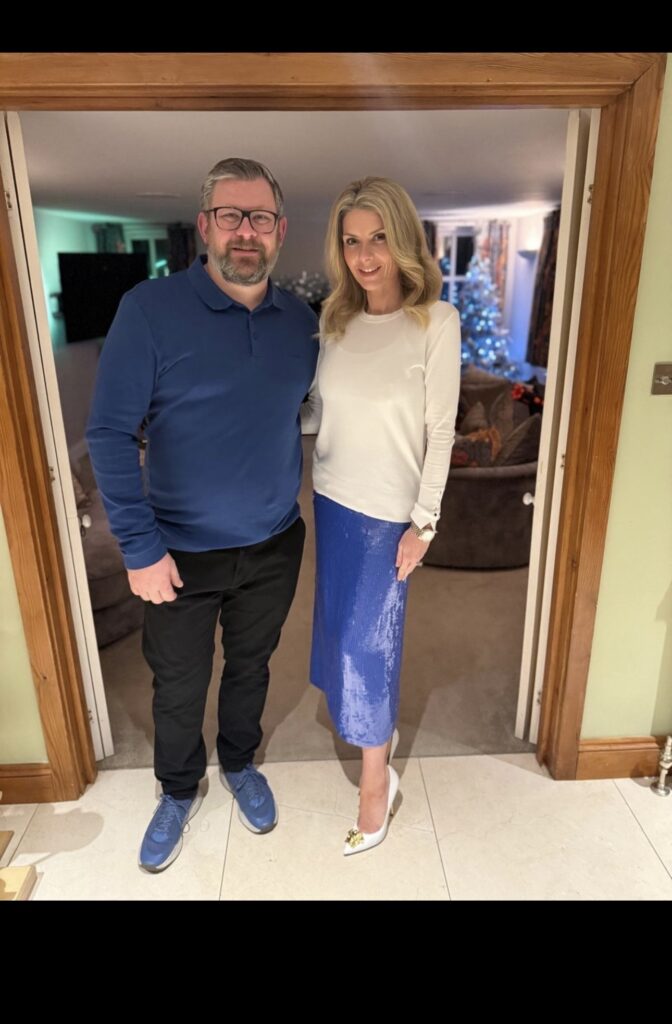
The darts world woke up to chaos.
What started as whispers inside VIP lounges and backstage corridors quickly exploded into a storm nobody saw coming. Fans were stunned. Social media erupted. Rumors spread faster than match highlights.
And at the center of it all stood one man.
Jason Wade.
For years, Wade had been celebrated as one of darts’ most fearless competitors — a player known for his icy stare, ruthless finishing, and dramatic comebacks under pressure. To supporters, he represented grit and determination. To rivals, he was a competitor who never backed down.
But now, headlines were painting a very different picture.
Not as a champion.
Not as a fighter.
But as a man caught in a deeply personal storm threatening to overshadow everything he had built.
The alleged marriage collapse became the talk of pubs, darts forums, and sports pages alike after mysterious reports surfaced suggesting Wade and his wife had been living separate lives behind closed doors.
No official statement.
No press conference.
Only speculation.
And speculation, as fans know, can be louder than truth.
The first signs of trouble reportedly emerged after Wade appeared unusually withdrawn during a televised appearance. Viewers immediately noticed something felt different.
The trademark confidence?
Gone.
The relaxed smile?
Missing.
Instead, cameras captured a player who appeared distracted and emotionally drained.
Within hours, social media detectives began piecing together clues.
Some claimed his wedding ring had disappeared.
Others insisted his wife had not attended several recent public appearances.
A few even alleged there had been tension building for months.
Suddenly, the darts community found itself asking one question:
Was something happening behind the scenes?
And if so…
How serious had things become?
As rumors intensified, anonymous online accounts began spreading sensational claims suggesting the marriage had reached breaking point following allegations of betrayal.
No evidence surfaced.
Yet the internet did what it always does.
It speculated.
Fans split into camps almost immediately.
Some defended Wade passionately.
“People need to leave him alone.”
“Private life is private life.”
“Stop judging before facts emerge.”
Others were far less sympathetic.
“If the rumors are true, that’s disappointing.”
“You can be a sports star and still make mistakes.”
“This story keeps getting bigger.”
The divide only fueled interest.
Every appearance became analyzed.
Every interview clip became dissected.
Every silence became interpreted as confirmation.
And then came the moment that truly ignited the frenzy.
During a major darts event, Wade arrived alone.
No family.
No familiar support team energy.
No visible attempt to address the growing controversy.
Television commentators avoided mentioning the rumors directly, but viewers sensed the tension immediately.
The arena buzzed with uncomfortable curiosity.
Could he block out the noise?
Or was the pressure becoming too much?
What followed shocked many.
Normally composed, Wade struggled to find rhythm.
Missed doubles.
Uncharacteristic frustration.
Visible irritation.
The crowd watched a champion battling not merely an opponent—but perhaps something far heavier.
Some fans believed the pressure was obvious.
Others warned against reading too much into one performance.
Still, perception can become reality.
And perception was turning ugly.
Back online, dramatic headlines multiplied.
“Marriage Meltdown?”
“Champion Facing Personal Crisis?”
“Trouble Behind The Fame?”
Even entertainment bloggers who rarely covered darts suddenly joined the conversation.
That alone showed how explosive the situation had become.
Meanwhile, sources claiming to be close to the family began offering conflicting stories.
One alleged the relationship had faced difficulties long before public attention.
Another insisted the couple had simply chosen privacy.
A third dramatically suggested emotions had reached boiling point weeks earlier.
Nobody knew what to believe.
But uncertainty often attracts attention more than certainty ever could.
Then came the photo.
A single image shared online sent shockwaves across fan communities.
The image allegedly showed Wade leaving an upscale venue late at night.
Standing nearby was an unidentified woman.
The picture was blurry.
The context unknown.
Yet the internet treated it like breaking evidence.
Within minutes, reposts exploded.
Comment sections spiraled.
Rumors intensified.
Supporters pushed back aggressively.
Critics doubled down.
And suddenly the story moved beyond sports.
Now it had become entertainment drama.
Observers began asking whether Wade’s career could survive the relentless scrutiny.
Because scandals—real or rumored—often leave scars.
Sponsors grow cautious.
Public opinion shifts.
Media pressure escalates.
And athletes, despite fame, remain human.
Former players weighed in cautiously during interviews.
Most avoided discussing details.
But several emphasized the emotional toll public speculation can have.
“Pressure off the stage can be harder than pressure on it,” one retired professional remarked.
Those words resonated.
For many fans, Wade no longer looked like merely a sports figure under criticism.
He looked exhausted.
And exhaustion invites concern.
But the controversy reached another level when rumors surfaced that his wife had allegedly left the family home.
Again, no confirmation.
No verified report.
Yet that did not stop online headlines from exploding.
“WALKS AWAY!”
“MARRIAGE OVER?”
“DIVORCE BOMBSHELL?”
The language grew increasingly dramatic.
And with each sensational post, public curiosity intensified.
People wanted answers.
Had the marriage truly collapsed?
Was betrayal involved?
Or had gossip simply grown beyond control?
Privately, many fans hoped for clarity.
Publicly, however, chaos reigned.
Then came perhaps the most uncomfortable moment.
At a press gathering following another tournament appearance, reporters attempted to question Wade about his personal life.
The room reportedly grew tense.
For a moment, it seemed he might respond.
Instead, he paused.
Looked down.
And quietly redirected attention toward darts.
The brief exchange lasted seconds.
Yet those seconds generated thousands of reactions online.
Some interpreted restraint.
Others interpreted guilt.
Many simply saw a man trying to preserve privacy.
But public opinion rarely waits for explanation.
And controversy rarely disappears on its own.
Meanwhile, his wife’s silence became another major talking point.
Friends and followers searched her online activity for clues.
Had posts been removed?
Were captions sending hidden messages?
Was silence itself meaningful?
Soon, ordinary observations transformed into elaborate theories.
One deleted image became “proof.”
One missing appearance became “evidence.”
One quiet week became “confirmation.”
Such is the strange machinery of internet speculation.
And once it begins spinning, slowing it becomes nearly impossible.
As headlines multiplied, debates spread beyond gossip.
Some fans criticized modern celebrity culture entirely.
They argued athletes deserve privacy.
That personal struggles should not become entertainment.
That public obsession crosses dangerous lines.
Others disagreed.
They argued public figures inevitably face scrutiny.
That fame brings attention—wanted or not.
The disagreement reflected a deeper question:
How much of a star’s life truly belongs to the public?
For Wade, the answer likely felt painfully complicated.
Because while critics debated principles, he still faced competition.
And competition waits for nobody.
Tournament schedules continued.
Expectations remained.
Fans still demanded performance.
Yet insiders reportedly noticed changes.
He appeared quieter.
More guarded.
More isolated.
Whether caused by rumors, exhaustion, or unrelated pressures, nobody knew.
But the narrative surrounding him had clearly shifted.
And narratives can become difficult to escape.
Then came another dramatic twist.
An anonymous entertainment blog claimed legal consultations were underway regarding a possible separation.
The claim spread instantly.
Again—no confirmation.
But confirmation often becomes secondary once sensationalism takes hold.
Within hours, “divorce scandal” dominated online discussions.
Video creators produced theories.
Commentators offered opinions.
Speculation became content.
And content became business.
For some observers, the situation revealed something uncomfortable about modern fame.
Scandal attracts attention.
Attention generates clicks.
Clicks create profit.
Truth sometimes arrives much later—if at all.
Yet amid the noise, one question persisted.
What if the reality was far more complicated than the headlines suggested?
Relationships are rarely simple.
Marriages experience pressures unseen by outsiders.
Fame can magnify misunderstandings.
Distance, schedules, scrutiny—all create strain.
Perhaps the public knew only fragments.
Perhaps the truth remained invisible behind speculation.
Still, curiosity remained relentless.
As days passed, Wade’s supporters launched their own campaign online.
They urged compassion.
Encouraged restraint.
Reminded others that rumors are not facts.
Their message gained traction.
“Respect privacy.”
“Let people heal.”
“Enough with the speculation.”
Those voices mattered.
Because even amid controversy, empathy still survives.
Yet tabloids continued escalating the story.
Some framed Wade as villain.
Others framed him as victim.
Few admitted uncertainty.
That uncertainty, however, may have been the only honest element in the entire saga.
Then, at last, came the moment many had waited for.
During a televised interview focused primarily on darts, Wade briefly addressed public scrutiny.
His words were measured.
Careful.
And revealing.
He acknowledged that public attention can become overwhelming.
He emphasized the importance of family and personal boundaries.
Most importantly, he urged people not to believe everything circulating online.
The statement did not answer every question.
In fact, it answered very few.
But perhaps that was intentional.
Because not every story belongs to spectators.
Not every struggle deserves headlines.
And not every silence hides scandal.
The response triggered yet another wave of debate.
Supporters praised his composure.
Critics accused him of avoiding specifics.
Neutral observers simply noted how exhausting the situation appeared.
By then, however, the damage—or at least the drama—had already spread.
The scandal narrative had become bigger than any single interview.
Bigger than any single rumor.
And perhaps even bigger than reality itself.
Yet through the storm, Wade continued competing.
That alone impressed many.
Stepping before crowds while facing personal scrutiny requires resilience few fully understand.
Whether admired or criticized, he remained present.
Focused.
Determined.
And maybe that was the most important detail of all.
Because controversy often promises easy conclusions.
Heroes.
Villains.
Winners.
Losers.
But life rarely follows such simple scripts.
Perhaps the marriage truly faced challenges.
Perhaps rumors exaggerated everything.
Perhaps the public would never know the full story.
And perhaps that uncertainty is exactly why the saga captivated so many.
In the end, what remained was not merely gossip.
It was a reminder.
Behind televised competition and dramatic headlines stand human beings navigating pressures invisible to audiences.
Fame may amplify success.
But it also amplifies pain.
And sometimes the loudest stories reveal more about public obsession than about the people involved.
As the darts world watches closely, questions still linger.
Will the rumors fade?
Will clarity eventually emerge?
Or will this saga remain one of those stories forever trapped between truth, speculation, and entertainment?
For now, fans remain divided.
Comment sections remain active.
And the mystery surrounding Jason Wade continues generating headlines.
One thing, however, is undeniable.
When scandal meets celebrity, silence becomes news—and every unanswered question becomes fuel for another dramatic chapter.
Full details?
Perhaps not yet.
But the story… may be far from over.