
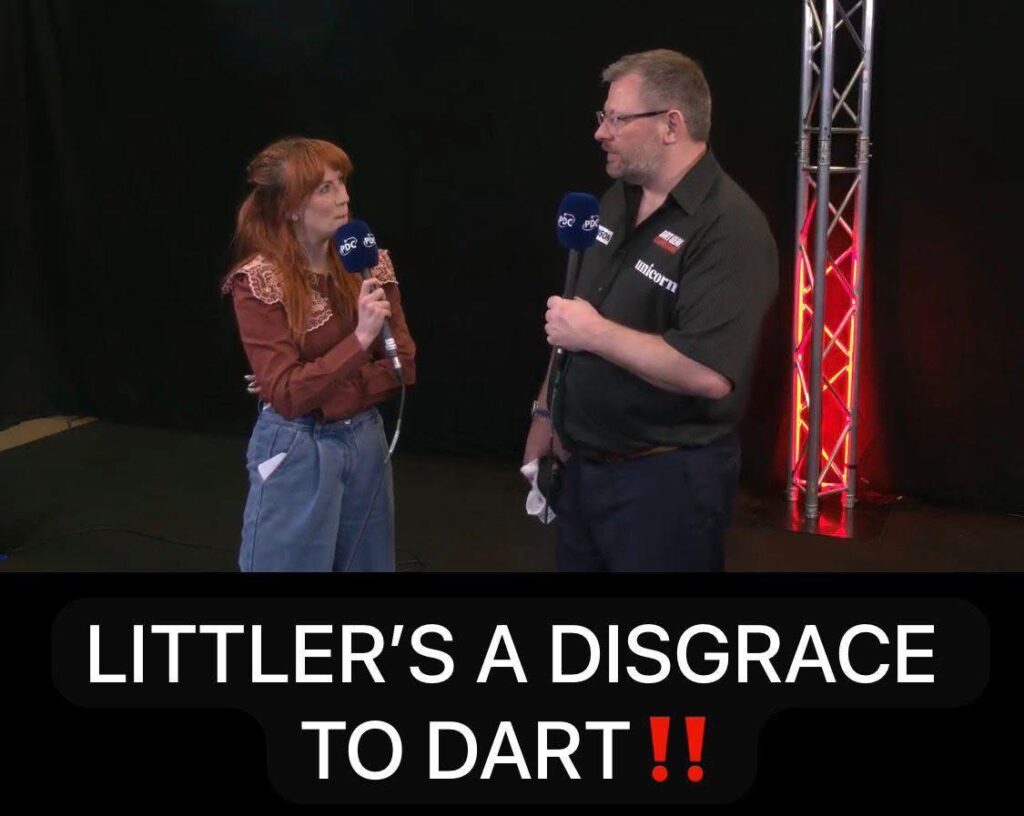
In recent days, social media has been flooded with sensational claims alleging that officials within the Professional Darts Corporation (PDC) signed a petition to permanently ban teenage darts sensation Luke Littler over an alleged cheating scandal. Some posts even claimed that tournament officials had uncovered “explosive evidence,” while others insisted that Littler faced a lifetime suspension from professional darts.
However, there is currently no verified evidence that any such petition exists, no official statement from the PDC confirming disciplinary action, and no credible reporting from major sports media organizations supporting the claims. Much of the controversy appears to have originated from misleading viral posts circulating primarily on Facebook and low-credibility social media pages known for publishing fabricated sports stories.
The rapid spread of the rumor highlights a growing problem in modern sports media: the rise of AI-generated clickbait headlines, misinformation, and fabricated controversy designed to generate engagement rather than report facts.
The Origins of the Viral Story
The controversy appears to have exploded after multiple Facebook pages published dramatic headlines claiming that senior PDC officials had turned against Littler and were demanding his permanent removal from professional darts.
Among the most widely shared posts were stories alleging:
- “Confirmed cheating evidence”
- “Lifetime ban imminent”
- “Match-fixing scandal”
- “Officials signing petitions”
- “Titles being stripped”
Despite the shocking wording, none of these claims were backed by official evidence, disciplinary documents, or statements from recognized governing bodies.
One widely circulated post even admitted within its own text that the reports were “completely false” and part of a viral misinformation campaign.
Another post attracted attention from fans who immediately challenged the claims in the comments section, with many calling the story “fake news” and criticizing the spread of unverified allegations.
No respected sports broadcasters — including Sky Sports, BBC Sport, ESPN, or Reuters — have reported any active cheating investigation involving Littler.
Who Is Luke Littler?
Luke Littler has become one of the biggest breakout stars in world darts history.
Nicknamed “The Nuke,” Littler burst onto the global stage with astonishing performances as a teenager, rapidly becoming one of the sport’s biggest attractions. His rise transformed darts viewership numbers, social media engagement, ticket sales, and mainstream interest in the game.
His achievements include:
- Reaching major televised finals at a remarkably young age
- Defeating established world champions
- Becoming one of the most recognizable faces in modern darts
- Helping attract younger audiences to the sport
- Driving major increases in TV ratings and sponsorship interest
Because of his meteoric rise, Littler has also become a frequent target of online rumors, exaggerated narratives, and manufactured controversies.
No Evidence of Match-Fixing or Cheating
At the center of the viral claims is the accusation that Littler cheated during professional matches. Yet no verified evidence has been presented publicly.
In professional darts, accusations of cheating or match-fixing are taken extremely seriously. Investigations typically involve:
- Betting pattern analysis
- Match footage review
- Statistical anomalies
- Interviews with players and officials
- Independent integrity units
If a genuine investigation were underway, major sports outlets and the PDC itself would almost certainly release formal statements.
Instead, there has been complete silence from official channels regarding any disciplinary action against Littler.
That silence strongly suggests the allegations are unfounded.
The PDC Has Issued No Ban
The Professional Darts Corporation has not announced:
- A suspension
- A lifetime ban
- An integrity hearing
- A cheating investigation
- A petition signed by officials
No such statement exists on official PDC platforms.
Professional sports organizations generally communicate disciplinary matters publicly, especially when they involve one of the sport’s biggest stars. The absence of any official announcement is a major indicator that the story lacks credibility.
Why Fake Sports Stories Spread So Quickly
The Littler rumor demonstrates how rapidly misinformation can spread online, especially when it involves famous athletes.
Several factors fuel these viral stories:
1. Emotional Headlines
Posts using words like:
- “BREAKING”
- “CHEATING SCANDAL”
- “PERMANENT BAN”
- “EXPOSED”
are designed to trigger emotional reactions and instant clicks.
2. Algorithm-Driven Engagement
Social media platforms often reward high-engagement content, regardless of accuracy. Outrage spreads faster than corrections.
3. AI-Generated Content
Many viral sports pages now use AI-generated text and manipulated headlines to create sensational stories rapidly.
Ironically, Littler himself recently moved to protect his image and likeness against misuse involving AI-generated content and fake products online.
4. Lack of Verification
Many users share stories without checking:
- Official sources
- Major sports outlets
- Governing body announcements
- Trusted journalists
This creates a cycle where false information gains momentum simply through repetition.
The Pressure of Fame at a Young Age
One reason stories involving Littler gain enormous traction is because his rise has been so extraordinary.
Teenage athletes often face intense public scrutiny, but Littler’s fame has accelerated at a remarkable speed.
He has had to deal with:
- Constant media attention
- Online criticism
- Fan expectations
- Social media abuse
- Rumors and fabricated stories
Despite this pressure, Littler has continued competing at the highest level of professional darts.
Rivalries and Online Drama Fuel Speculation
Darts fans are passionate, and rivalries can sometimes intensify online narratives.
Certain social media posts attempted to suggest that rival players or officials wanted Littler banned. Yet no credible evidence supports claims that top professionals signed petitions against him.
Professional darts players frequently criticize performances, scheduling, crowd behavior, or tournament decisions, but accusations of organized campaigns against players are rare and would attract immediate scrutiny.
Without evidence, such allegations remain speculation.
How Real Match-Fixing Investigations Work in Darts
To understand why the viral claims appear dubious, it helps to examine how legitimate integrity investigations operate.
When real concerns emerge in professional darts, authorities typically involve:
- The Darts Regulation Authority (DRA)
- Betting integrity services
- Gambling monitoring systems
- Independent investigators
Past disciplinary cases in darts have included clear evidence such as:
- Suspicious betting patterns
- Confessions
- Recorded communications
- Financial transactions
- Cooperation with bookmakers
No such evidence has surfaced regarding Littler.
The Dangers of False Allegations
Spreading unverified accusations can seriously damage athletes’ reputations.
Even when claims are false, headlines can leave lasting impressions.
False sports scandals can impact:
- Sponsorships
- Mental health
- Public perception
- Career opportunities
- Personal relationships
For a young athlete like Littler, repeated misinformation campaigns can create significant pressure.
Fans Push Back Against Misinformation
Interestingly, many darts fans quickly challenged the viral claims online.
Under several social media posts, commenters questioned:
- The lack of official evidence
- The absence of mainstream reporting
- Contradictions within the stories
- The credibility of the pages posting them
Some users directly labeled the stories “fake news.”
This reaction shows that many sports fans are becoming increasingly skeptical of sensational online reporting.
The Business of Viral Sports Content
Fake sports stories often generate substantial traffic and advertising revenue.
Creators exploit trending athletes because famous names attract clicks.
As one of the biggest young stars in global darts, Littler represents an ideal target for engagement-driven misinformation.
Posts about him regularly receive:
- Massive comment counts
- Viral shares
- Debate among fans
- Emotional reactions
For content farms, controversy equals profit.
Luke Littler’s Real Challenges
Although there is no evidence of cheating allegations being legitimate, Littler has experienced genuine controversies and challenges during his career.
For example, he previously criticized tournament rules after being denied entry to an event due to arriving late following traffic issues.
That situation involved scheduling disputes and frustration — not cheating accusations.
Such incidents demonstrate how real sporting disagreements can sometimes become exaggerated online.
Social Media and the Future of Sports Journalism
The Littler rumor raises broader questions about the future of sports reporting.
Traditional journalism relies on:
- Verification
- Named sources
- Editorial oversight
- Evidence standards
Many viral social media pages operate without those safeguards.
As a result, fans increasingly need to distinguish between: