
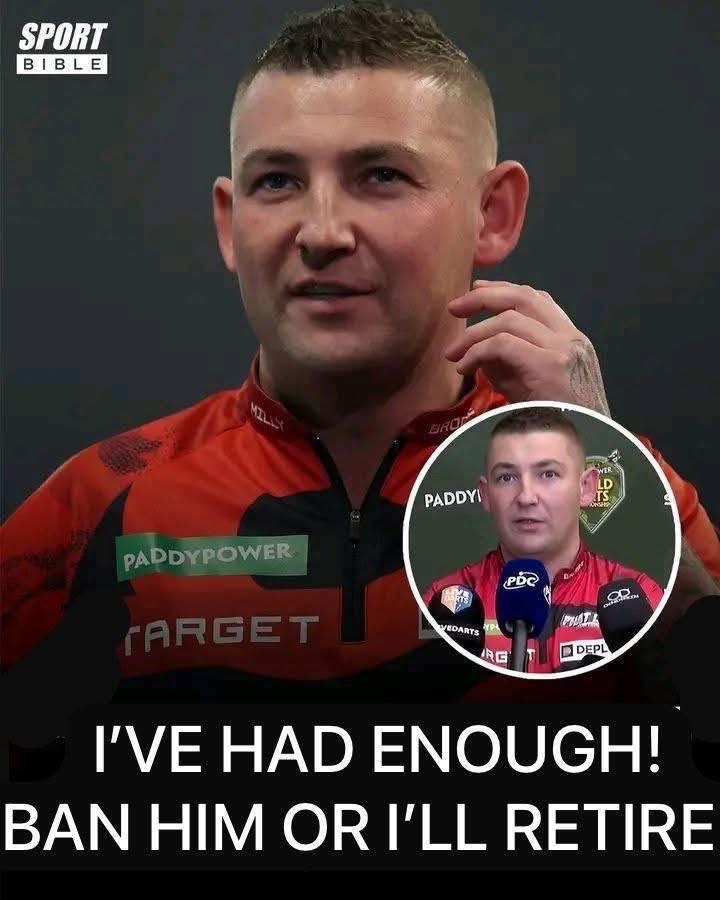
The darts world is buzzing — and not everyone is clapping.
Luke Littler’s explosive rise from teenage sensation to headline-dominating superstar has transformed professional darts almost overnight. Packed arenas. Record-breaking viewership. Endless social media edits. New fans flooding into the sport.
But behind the walk-on music and flashing lights, whispers are growing louder.
Is the PDC locker room united behind the sport’s newest icon… or is there a quiet divide forming among the tour’s established stars?
The Littler Effect: Fame at Lightning Speed
When Luke Littler burst onto the biggest stages, he didn’t just win matches — he shifted the spotlight.
Veteran professionals who had spent years grinding through the tour suddenly found media attention pivoting toward the 17-year-old prodigy. Press conferences revolved around him. Broadcast panels dissected his throw. Even opponents’ interviews seemed to circle back to one question:
“What’s it like playing Luke Littler?”
For players who have fought tooth and nail for recognition, that shift is impossible to ignore.
And while most have publicly praised Littler’s talent, insiders suggest that the speed of his ascent has sparked serious conversations behind closed doors.
Nathan Aspinall Speaks on the Changing Landscape
Nathan Aspinall has never been one to shy away from honesty. A multiple major champion known for his grit and emotional performances, Aspinall represents a generation of players who built their reputations through relentless consistency.
In recent interviews, he’s acknowledged the impact Littler has had on the sport — calling it “massive” and “great for darts.” But he’s also hinted at the pressure it creates.
“When someone comes in and changes everything that quickly, it forces everyone else to step up,” Aspinall noted. “That’s not a bad thing — but it’s intense.”
That word — intense — keeps coming up.
Because while Littler’s presence has elevated the sport’s profile, it has also intensified competition in ways the tour hasn’t experienced in years.
The Unspoken Reality of Generational Shift
Every sport faces this moment.
A young superstar emerges. Fans rally behind the new face. Sponsors chase fresh energy. And veterans must adapt or risk fading from headlines.
For players who have dedicated decades to mastering their craft, the shift can feel abrupt.
It’s not resentment.
It’s reality.
When Luke Littler steps on stage, the atmosphere changes. Crowd chants grow louder. Cameras linger longer. Social media explodes within seconds of a 180.
Opponents don’t just play a talented teenager — they face a tidal wave of attention.
And in professional sport, attention equals pressure.
Is the Locker Room Really Divided?
Let’s be clear: there is no confirmed feud. No official statements of conflict. No petitions, no bans, no disciplinary drama.
But competitive tension?
That’s undeniable.
Sources close to the tour describe a locker room that is “professional but aware.” Aware of the shifting hierarchy. Aware of the narrative momentum. Aware that darts has entered a new era faster than anyone anticipated.
Some veterans reportedly embrace the challenge, seeing Littler as motivation. Others feel the media narrative overlooks the depth of talent across the tour.
One former player put it bluntly:
“It’s not about disliking him. It’s about balance. There are world-class players who’ve been here for years.”
The Pressure of Playing the Prodigy
Ask any competitor: facing a crowd favorite is different.
The cheers aren’t neutral. Every missed double draws a collective gasp. Every Littler 180 feels amplified.
Nathan Aspinall has thrived in hostile environments before. But even he has acknowledged that playing during this new era requires heightened focus.
“It’s about blocking everything out,” he said. “You’ve got to play the board, not the noise.”
That’s easier said than done.
Because when the noise follows you onto social media, into interviews, and across headlines, it becomes part of the competition.
The PDC’s Balancing Act
The Professional Darts Corporation has masterfully ridden the wave of Littler’s popularity. Promotional materials feature his highlights. Broadcasters lean into the narrative of youth versus experience.
And from a business perspective, it makes sense.
The sport is growing.
Prize funds are increasing. Global interest is expanding. Younger audiences are tuning in.
But growth brings responsibility.
The PDC must ensure that while celebrating new stars, it continues to spotlight the veterans who built the foundation of modern darts.
And so far, there is no indication that the governing body sees division — only evolution.
Social Media: Fuel or Fire?
In previous eras, locker room debates stayed private.
Now? A single facial expression can spark online speculation.
A handshake analyzed frame by frame. A neutral comment turned into a viral headline. Fans choosing sides in debates that players themselves may not even recognize.
Nathan Aspinall, like many pros, has experienced the highs and lows of social media scrutiny. He understands how quickly narratives spiral.
And while there’s no verified conflict, the online world thrives on rivalry.
Team Littler. Team Veterans. The conversation practically writes itself.
Respect Still Runs Deep
Despite the buzz, one theme consistently emerges from interviews: respect.
Aspinall has praised Littler’s composure. Littler has spoken about admiring established champions.
On stage, competition is fierce. Off stage, professionalism remains intact.
Because at the elite level, players understand something fans sometimes forget:
Talent deserves recognition — regardless of age.
What This Really Means for Darts
This isn’t a civil war.
It’s a turning point.
Luke Littler’s arrival accelerated a generational shift that was already underway. Younger players are rising. Established stars are adapting. The sport is evolving in real time.
And Nathan Aspinall sits right in the middle of that transition — experienced enough to represent the old guard, young enough to compete in the new wave.
That tension? It’s not destructive.
It’s electric.
The Matches Ahead
The next time Aspinall and Littler meet on stage, the narrative will be unavoidable.
Commentators will mention it. Fans will debate it. Social feeds will explode before the first dart is thrown.
But at the end of the day, it comes down to one thing:
Three darts. Double out.
No petitions. No bans. No confirmed locker room feud.
Just elite competition at its most intense.
Final Take: Rivalry Is Good for Business
If anything, the perception of division has made darts more compelling.
Fans love storylines. They crave tension. They want heroes and challengers.
Nathan Aspinall represents resilience, experience, and earned status. Luke Littler represents youth, fearlessness, and a new era.
Put them on the same stage, and sparks are guaranteed — not because of animosity, but because of ambition.
And ambition is the lifeblood of sport.
So is the locker room split?
Not officially.
But is the competition fiercer than ever?
Absolutely.
And for darts fans around the world, that might be the best news of all.