
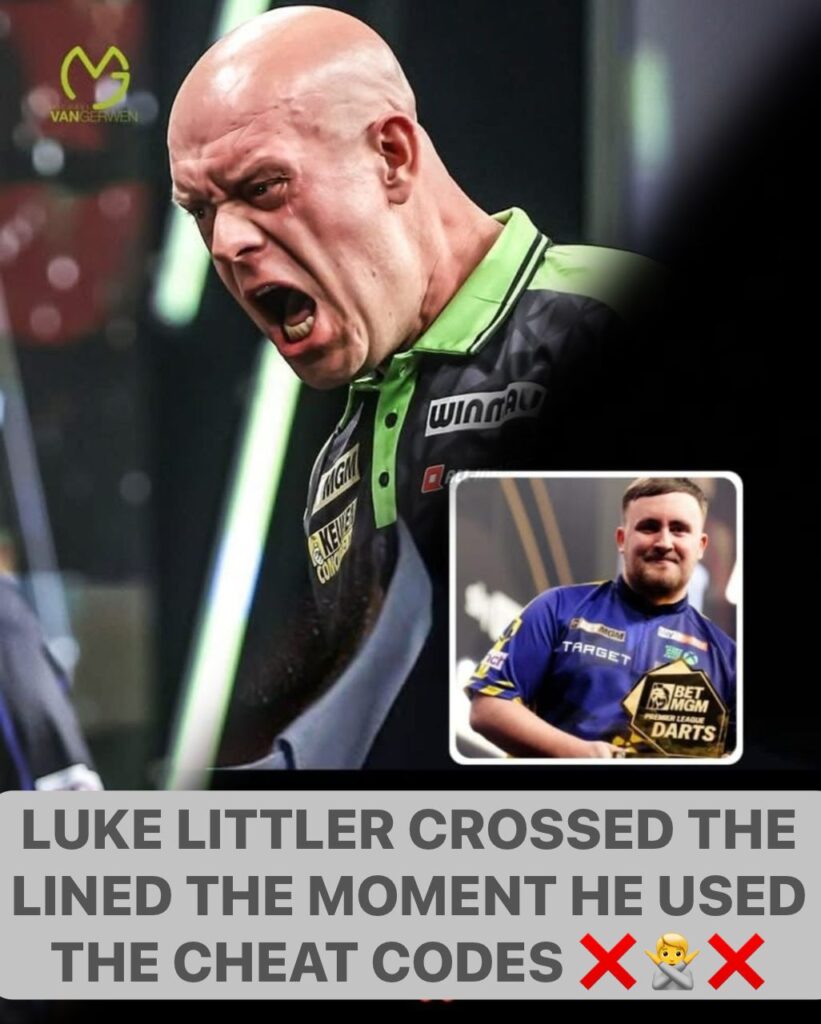
The professional darts scene has been thrown into a storm of debate and speculation after Dutch legend Michael van Gerwen publicly called for a closer look at recent performances by rising star Luke Littler.
What began as murmurs among fans has quickly escalated into one of the most talked-about controversies in the sport this year—fuelled by viral clips, heated opinions, and a phrase that’s now everywhere: “cheat codes.”
But what does it actually mean? And is there any truth behind the noise?
🔥 The Moment That Sparked It All
The tension reportedly began after a series of standout performances from Luke Littler that left fans both amazed and, in some corners, suspicious. Social media lit up with slow-motion breakdowns, frame-by-frame analyses, and bold claims suggesting that something about his gameplay felt “too perfect.”
Soon after, clips began circulating with captions like:
- “This doesn’t look normal 👀”
- “How is this even possible?”
- “Is this skill… or something else?”
While many praised Littler’s talent, others began questioning whether the sport needed to take a closer look.
🎯 Van Gerwen Speaks Out
In the middle of the online frenzy, Michael van Gerwen reportedly weighed in—urging the Professional Darts Corporation (PDC) to ensure that the integrity of the game remains intact.
While his comments stopped short of making direct accusations, the message was clear:
when questions arise, transparency matters.
According to fans interpreting his stance, Van Gerwen’s position reflects a broader concern shared by many professionals—keeping the sport fair, competitive, and beyond doubt.
📱 Social Media Goes Into Overdrive
It didn’t take long for the situation to explode online.
Within hours:
- Hashtags related to Littler and “cheat codes” began trending
- Fans split into two camps—defenders and skeptics
- Influencers and commentators added fuel with reaction videos
One viral post read:
“This is either generational talent… or something we need explained.”
Another countered:
“Stop trying to tear down a young player. This is pure skill.”
The divide has only deepened as more clips and opinions continue to circulate.
⚖️ The Fine Line Between Skill and Suspicion
At the heart of the controversy lies a familiar issue in sports:
When does excellence start to look suspicious?
For young athletes like Luke Littler, rapid success often brings intense scrutiny. Every movement is analyzed. Every result is questioned.
And in today’s digital age, even the smallest moment can be replayed thousands of times—each version adding a new layer of interpretation.
Experts within darts circles have pointed out that:
- High-level consistency can appear “unnatural” to casual viewers
- Camera angles and edits can distort perception
- Online narratives often outpace verified facts
🧠 What Are Fans Calling “Cheat Codes”?
Despite the dramatic phrasing, “cheat codes” isn’t being used literally—it’s more of a viral expression to describe performances that seem almost unreal.
In gaming, cheat codes give players an unfair advantage. In this context, the phrase is being used by fans to question whether something about the gameplay feels too perfect.
But as of now:
➡️ There is no confirmed evidence of any wrongdoing
➡️ No official ruling has suggested any violation
➡️ The claims remain purely speculative
🏟️ The Role of the PDC
The Professional Darts Corporation is responsible for maintaining standards and ensuring fair play in professional darts.
While calls for review have surfaced, it’s important to note that:
- Investigations are typically based on concrete evidence
- Online speculation alone does not trigger formal action
- Player integrity is taken seriously
If any concerns were to arise officially, the PDC has established procedures to handle them thoroughly and fairly.
💬 Players and Analysts React
Beyond Van Gerwen’s reported stance, the wider darts community has responded cautiously.
Some analysts have emphasized:
- The importance of protecting players from unfounded claims
- The need for responsible discussion around performance
- The danger of viral narratives shaping public opinion
Others, however, believe that scrutiny is part of professional sport—and that transparency only strengthens credibility.
❤️ Fans Rally Behind Littler
Amid the noise, a significant portion of the fanbase has come out strongly in support of Luke Littler.
Supporters argue that:
- His performances are the result of hard work and talent
- The backlash reflects the pressure of rising fame
- The “cheat code” label is being taken too far
One trending comment summed it up:
“We’re watching greatness—and some people can’t handle it.”
🚨 The Danger of Viral Accusations
This situation highlights a growing issue in modern sports:
the speed at which unverified claims can spread.
With millions of users sharing, commenting, and reacting, narratives can form almost instantly—often without evidence.
For athletes, this can mean:
- Reputational damage
- Increased pressure
- Unfair scrutiny
And once a narrative takes hold, it can be difficult to reverse.
🔮 What Happens Next?
At this stage, the story remains driven largely by online conversation rather than official developments.
Key questions remain:
- Will the PDC respond publicly?
- Will any clarification be issued?
- Or will the controversy fade as quickly as it appeared?
What’s clear is that the spotlight on Luke Littler isn’t dimming anytime soon.
🏁 Final Thoughts
The darts world thrives on competition, precision, and passion. Moments like this—where performance meets controversy—test not just players, but the entire community.
For Michael van Gerwen, the call for clarity reflects a desire to protect the integrity of the sport.
For Luke Littler, it’s another chapter in a rapidly rising career now under intense global attention.
And for fans?
It’s a reminder to separate fact from speculation—even when the headlines are impossible to ignore.
The professional darts scene has been thrown into a storm of debate and speculation after Dutch legend Michael van Gerwen publicly called for a closer look at recent performances by rising star Luke Littler.
What began as murmurs among fans has quickly escalated into one of the most talked-about controversies in the sport this year—fuelled by viral clips, heated opinions, and a phrase that’s now everywhere: “cheat codes.”
But what does it actually mean? And is there any truth behind the noise?
🔥 The Moment That Sparked It All
The tension reportedly began after a series of standout performances from Luke Littler that left fans both amazed and, in some corners, suspicious. Social media lit up with slow-motion breakdowns, frame-by-frame analyses, and bold claims suggesting that something about his gameplay felt “too perfect.”
Soon after, clips began circulating with captions like:
- “This doesn’t look normal 👀”
- “How is this even possible?”
- “Is this skill… or something else?”
While many praised Littler’s talent, others began questioning whether the sport needed to take a closer look.
🎯 Van Gerwen Speaks Out
In the middle of the online frenzy, Michael van Gerwen reportedly weighed in—urging the Professional Darts Corporation (PDC) to ensure that the integrity of the game remains intact.
While his comments stopped short of making direct accusations, the message was clear:
when questions arise, transparency matters.
According to fans interpreting his stance, Van Gerwen’s position reflects a broader concern shared by many professionals—keeping the sport fair, competitive, and beyond doubt.
📱 Social Media Goes Into Overdrive
It didn’t take long for the situation to explode online.
Within hours:
- Hashtags related to Littler and “cheat codes” began trending
- Fans split into two camps—defenders and skeptics
- Influencers and commentators added fuel with reaction videos
One viral post read:
“This is either generational talent… or something we need explained.”
Another countered:
“Stop trying to tear down a young player. This is pure skill.”
The divide has only deepened as more clips and opinions continue to circulate.
⚖️ The Fine Line Between Skill and Suspicion
At the heart of the controversy lies a familiar issue in sports:
When does excellence start to look suspicious?
For young athletes like Luke Littler, rapid success often brings intense scrutiny. Every movement is analyzed. Every result is questioned.
And in today’s digital age, even the smallest moment can be replayed thousands of times—each version adding a new layer of interpretation.
Experts within darts circles have pointed out that:
- High-level consistency can appear “unnatural” to casual viewers
- Camera angles and edits can distort perception
- Online narratives often outpace verified facts
🧠 What Are Fans Calling “Cheat Codes”?
Despite the dramatic phrasing, “cheat codes” isn’t being used literally—it’s more of a viral expression to describe performances that seem almost unreal.
In gaming, cheat codes give players an unfair advantage. In this context, the phrase is being used by fans to question whether something about the gameplay feels too perfect.
But as of now:
➡️ There is no confirmed evidence of any wrongdoing
➡️ No official ruling has suggested any violation
➡️ The claims remain purely speculative
🏟️ The Role of the PDC
The Professional Darts Corporation is responsible for maintaining standards and ensuring fair play in professional darts.
While calls for review have surfaced, it’s important to note that:
- Investigations are typically based on concrete evidence
- Online speculation alone does not trigger formal action
- Player integrity is taken seriously
If any concerns were to arise officially, the PDC has established procedures to handle them thoroughly and fairly.
💬 Players and Analysts React
Beyond Van Gerwen’s reported stance, the wider darts community has responded cautiously.
Some analysts have emphasized:
- The importance of protecting players from unfounded claims
- The need for responsible discussion around performance
- The danger of viral narratives shaping public opinion
Others, however, believe that scrutiny is part of professional sport—and that transparency only strengthens credibility.
❤️ Fans Rally Behind Littler
Amid the noise, a significant portion of the fanbase has come out strongly in support of Luke Littler.
Supporters argue that:
- His performances are the result of hard work and talent
- The backlash reflects the pressure of rising fame
- The “cheat code” label is being taken too far
One trending comment summed it up:
“We’re watching greatness—and some people can’t handle it.”
🚨 The Danger of Viral Accusations
This situation highlights a growing issue in modern sports:
the speed at which unverified claims can spread.
With millions of users sharing, commenting, and reacting, narratives can form almost instantly—often without evidence.
For athletes, this can mean:
- Reputational damage
- Increased pressure
- Unfair scrutiny
And once a narrative takes hold, it can be difficult to reverse.
🔮 What Happens Next?
At this stage, the story remains driven largely by online conversation rather than official developments.
Key questions remain:
- Will the PDC respond publicly?
- Will any clarification be issued?
- Or will the controversy fade as quickly as it appeared?
What’s clear is that the spotlight on Luke Littler isn’t dimming anytime soon.
🏁 Final Thoughts
The darts world thrives on competition, precision, and passion. Moments like this—where performance meets controversy—test not just players, but the entire community.
For Michael van Gerwen, the call for clarity reflects a desire to protect the integrity of the sport.
For Luke Littler, it’s another chapter in a rapidly rising career now under intense global attention.
And for fans?
It’s a reminder to separate fact from speculation—even when the headlines are impossible to ignore.