
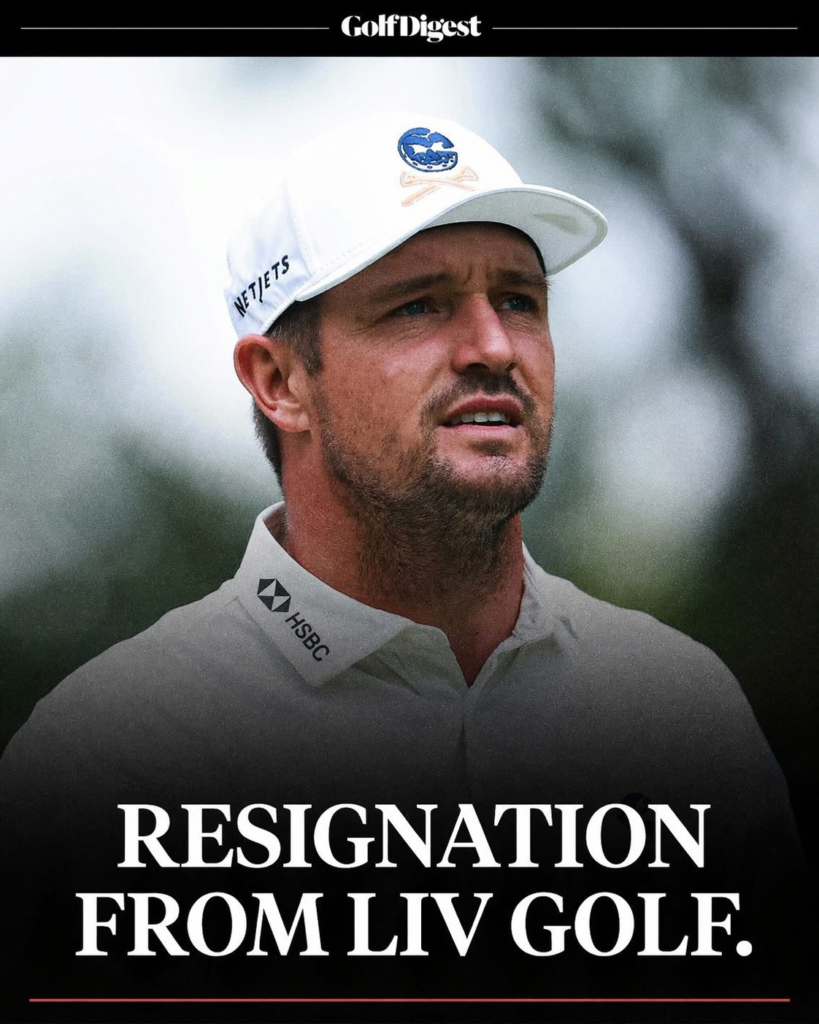
The golf world thrives on rivalries, power moves, and headline-grabbing twists—but few developments have sent shockwaves through the sport quite like this. Bryson DeChambeau, one of the most polarizing and fascinating figures in modern golf, is reportedly stepping away from LIV Golf in what could become one of the most dramatic career pivots in recent history. And the reason? A potential, headline-dominating return to the PGA Tour.
If confirmed, this move doesn’t just impact DeChambeau—it could reshape the entire landscape of professional golf.
A Decision That Changes Everything
When DeChambeau initially left the PGA Tour in 2022 to join LIV Golf, it was seen as a bold, controversial decision. The Saudi-backed league offered massive financial incentives, fewer tournaments, and a team-based format designed to disrupt the traditional structure of golf.
At the time, DeChambeau was at the peak of his fame. Known for his scientific approach to the game—earning him the nickname “The Scientist”—he brought power, innovation, and unpredictability to every tournament he entered. His move to LIV Golf symbolized a shift: the beginning of a new era where players were willing to challenge tradition for opportunity.
Now, just a few years later, that same decision appears to be unraveling.
Sources close to the situation suggest that DeChambeau has grown increasingly reflective about his long-term legacy—something that LIV Golf, despite its financial appeal, may not fully provide.
The LIV Golf Experiment
To understand the weight of this potential resignation, you have to understand what LIV Golf represents.
Launched as a disruptor to the PGA Tour, LIV Golf promised faster-paced events, team competition, and unprecedented prize money. It attracted several high-profile players, sparking debates across the sport about loyalty, legacy, and the future of golf.
For DeChambeau, the move initially seemed like a perfect fit. His personality—analytical, unconventional, and forward-thinking—aligned with LIV’s mission to challenge the status quo.
But over time, cracks began to show.
While LIV events delivered spectacle, critics argued they lacked the history, prestige, and competitive depth of traditional PGA Tour tournaments. Major championships—like The Masters and the U.S. Open—still held the ultimate weight in defining a golfer’s legacy, and participation in those events became increasingly complicated for LIV players.
For someone like DeChambeau, whose career has always balanced innovation with ambition, that limitation may have become impossible to ignore.
Why the PGA Tour Still Matters
Despite LIV Golf’s rise, the PGA Tour remains the gold standard in professional golf. It’s where legends are made, rivalries are forged, and history is written.
For DeChambeau, a return to the PGA Tour wouldn’t just be about playing golf—it would be about reclaiming a narrative.
The PGA Tour offers:
- Legacy-defining tournaments
- Deeper competition fields
- Global recognition and rankings influence
- A platform for historical greatness
While LIV Golf brought financial rewards, the PGA Tour still offers something money can’t buy: legacy.
And for a player who has already won a major championship and tasted global success, legacy might now matter more than ever.
Redemption Arc or Risky Gamble?
Let’s be clear—returning to the PGA Tour won’t be simple.
Players who left for LIV Golf faced suspensions and strained relationships with the PGA Tour. While ongoing negotiations and evolving policies could open the door for returns, nothing is guaranteed.
If DeChambeau does attempt a comeback, he could face:
- Eligibility hurdles
- Fan skepticism
- Locker room tension
- Intense media scrutiny
But there’s another side to this story.
Sports fans love a redemption arc.
If DeChambeau frames his return as a renewed commitment to competition and legacy, he could win back audiences—and even elevate his status in the sport.
The Bigger Picture: Golf’s Civil War
This potential move isn’t happening in isolation. It comes at a time when the divide between LIV Golf and the PGA Tour remains one of the biggest storylines in sports.
For years, golf has been split into two competing visions:
- Tradition vs. innovation
- Legacy vs. financial freedom
- History vs. disruption
DeChambeau’s resignation could signal something bigger—a shift in momentum.
If one of LIV’s most recognizable stars walks away, it raises questions:
- Are other players reconsidering their decisions?
- Is LIV Golf losing its grip on top talent?
- Could the PGA Tour regain its dominance?
Or, alternatively, could this be part of a larger reconciliation between the two sides?
What This Means for Fans
For fans, this is pure drama—and potentially great news.
A return to the PGA Tour would mean:
- Seeing DeChambeau compete against the world’s best more regularly
- Renewed rivalries with top players
- More high-stakes tournaments with familiar faces
It also adds unpredictability to a sport that thrives on storylines.
Imagine DeChambeau teeing it up again in a packed PGA Tour field, with cameras following his every move and commentators dissecting every shot. That’s not just golf—that’s must-watch television.
The DeChambeau Factor
Love him or hate him, DeChambeau brings attention.
His long drives, analytical methods, and outspoken personality make him one of the most marketable players in golf. Every tournament he enters becomes more compelling.
And that’s exactly why this story matters so much.
If he leaves LIV Golf, it’s not just a roster change—it’s a statement.
A statement about priorities.
A statement about legacy.
A statement about the future of the sport.
Timing Is Everything
The timing of this reported resignation couldn’t be more interesting.
With ongoing discussions about the future structure of professional golf, sponsorship dynamics shifting, and fan engagement evolving, DeChambeau’s move could influence decisions at the highest level.
It might even accelerate changes that have been quietly brewing behind the scenes.
Because when a player of his stature makes a move, people pay attention.
What Happens Next?
As of now, the situation remains fluid.
Key questions still hang in the air:
- Will DeChambeau officially confirm his resignation?
- Will the PGA Tour welcome him back—and under what conditions?
- How will LIV Golf respond to losing one of its marquee players?
Until those answers come, speculation will continue to grow.
But one thing is certain: the golf world is watching.
Final Thoughts
If Bryson DeChambeau does indeed walk away from LIV Golf in pursuit of a return to the PGA Tour, it will go down as one of the boldest moves of his career.
It’s a gamble.
It’s a risk.
But it’s also a chance at something bigger.
Legacy.
Because in the end, golf isn’t just about money or innovation—it’s about history. And history, more often than not, is written on the PGA Tour.
So if DeChambeau is truly ready to make this leap, one thing is clear:
The next chapter of his career could be the most explosive yet.