
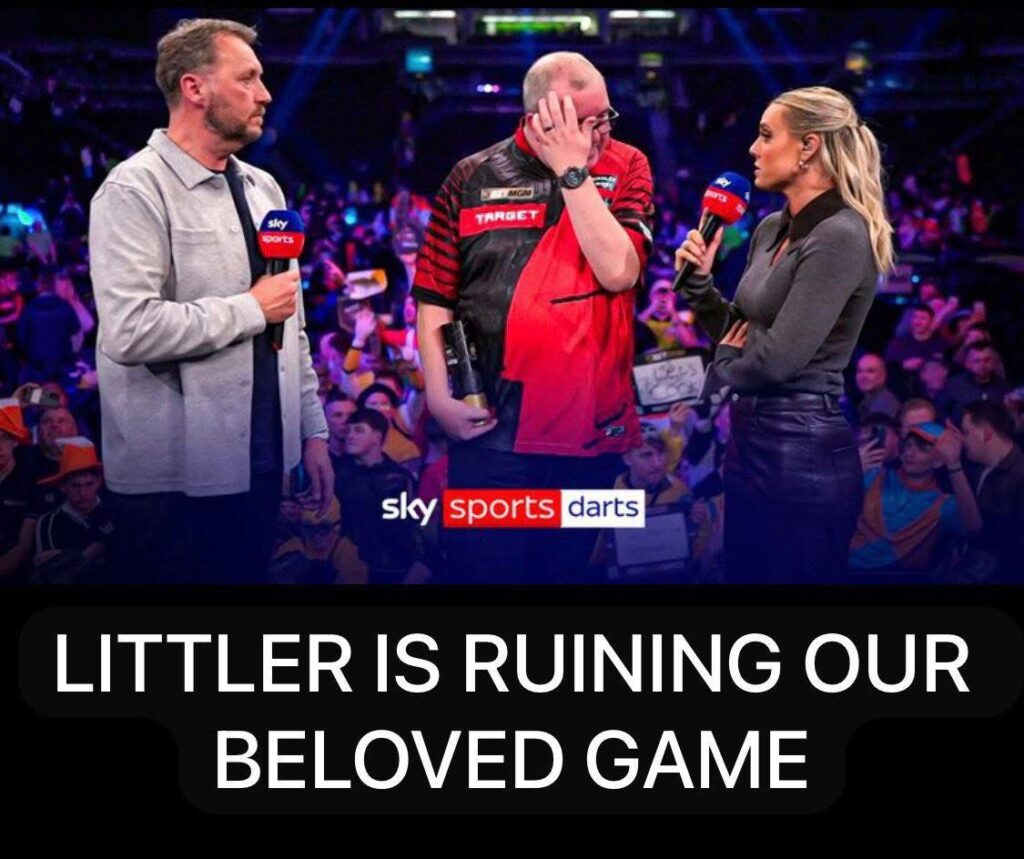
The atmosphere inside the arena was electric long before the players even walked onto the stage. Fans packed the venue with anticipation, eager to witness another dramatic night of Premier League-style darts featuring two of the sport’s biggest personalities — the experienced and passionate Stephen Bunting and the teenage sensation Luke Littler.
But by the end of the night, it was not only the darts that had everyone talking.
Instead, social media exploded with debates, heated opinions, and emotional reactions after Bunting delivered an emotional post-match interview in which he called for a stronger focus on sportsmanship, mental pressure, and professionalism in modern darts.
The veteran star stopped short of accusing anyone directly of wrongdoing, but his comments immediately sparked conversations across the darts community about the changing atmosphere within the professional game and the psychological tactics some players are believed to use during high-pressure matches.
Fans online quickly began dissecting every moment of the tense clash between Bunting and Littler, with some insisting the drama was being blown out of proportion while others claimed the emotional interview exposed growing frustration among older players struggling to deal with the new generation of fearless stars.
One thing was certain:
The darts world suddenly found itself divided.
A Match Filled With Tension From The Start
From the very beginning, the energy around the match felt different.
As soon as Littler walked onto the stage, the crowd erupted with the kind of deafening reaction that has followed him almost everywhere since his meteoric rise to fame. The young star looked relaxed, smiling confidently as cameras flashed around the arena.
Bunting, meanwhile, appeared laser-focused.
The experienced Englishman has built a reputation over the years as one of the most emotional and passionate players in professional darts. Known for wearing his heart on his sleeve, Bunting thrives on crowd energy and emotional momentum.
Yet observers immediately noticed something unusual.
Throughout the opening legs, Bunting repeatedly stepped away from the oche shaking his head in frustration. Commentators also pointed out that the pace of the match seemed awkward at times, with momentum swinging unpredictably between both players.
Littler, calm as ever, continued producing massive scores and clinical finishes.
The teenager’s composure only added to the growing tension inside the venue.
Each time Littler landed a huge maximum, sections of the crowd exploded into chants while others attempted to rally behind Bunting in response.
What began as a normal high-profile darts match slowly evolved into something far more emotionally charged.
The Turning Point
The moment that truly changed the atmosphere came midway through the contest.
After missing a crucial double that could have shifted momentum in his favor, Bunting appeared visibly frustrated. Cameras captured him muttering to himself while pacing behind the stage area during the short break.
Meanwhile, Littler remained almost expressionless.
That contrast immediately became a talking point online.
Some fans praised Littler’s ice-cold mentality, calling him “untouchable under pressure,” while others sympathized with Bunting, arguing that modern darts environments have become increasingly difficult for emotional players to navigate.
As the match resumed, Littler elevated his game even further.
Huge scoring visits piled pressure onto Bunting, who suddenly found himself struggling to maintain rhythm.
Despite moments of brilliance from “The Bullet,” Littler’s relentless consistency proved difficult to stop.
Every missed opportunity seemed to increase the emotional intensity of the occasion.
By the closing stages, the crowd sensed that the match had become about far more than just numbers on a scoreboard.
Bunting’s Emotional Interview Stuns Fans
Following the match, broadcasters expected a routine interview analyzing finishing percentages and key moments.
Instead, they received something far more emotional.
Bunting appeared visibly upset as he reflected on the direction professional darts is heading.
Without naming specific incidents or accusing anyone of misconduct, the veteran passionately discussed the mental side of the game and the importance of preserving respect and sportsmanship within the PDC environment.
“There’s a lot changing in darts right now,” Bunting said.
“You’ve got to stay mentally strong every single second up there. The atmosphere, the pressure, the pace — everything feels different now.”
The interview immediately went viral.
Many viewers interpreted his comments as frustration toward the intimidating intensity of younger players entering the sport with complete fearlessness.
Others believed Bunting was simply expressing concern about how emotionally exhausting elite-level darts has become.
One phrase in particular triggered major reactions online.
“We can’t lose what makes this sport special,” Bunting said emotionally. “There has to be respect for the game, respect for players, and respect for the crowd.”
That single statement quickly spread across social media platforms within minutes.
Fans Split Into Two Camps
Within hours, the darts community became deeply divided.
Supporters of Bunting praised him for speaking honestly about the emotional strain professional players experience.
Many longtime darts fans argued that modern events have become increasingly chaotic due to crowd behavior, social media pressure, and the constant spotlight surrounding younger stars like Littler.
Some supporters claimed veteran players deserve more protection from hostile atmospheres and excessive online criticism.
Others, however, saw the situation completely differently.
Littler fans defended the teenage star passionately, insisting that confidence, composure, and mental toughness are all part of elite competition.
They argued that Littler had done nothing wrong and simply outperformed his opponent under pressure.
Several fans even accused critics of unfairly targeting the young sensation because of his dominance and popularity.
As debates intensified online, clips from the match began circulating everywhere.
Every stare, every pause, and every emotional reaction was analyzed frame by frame by fans desperate to interpret what truly happened on stage.
The Rise of Psychological Warfare in Modern Darts
One of the biggest talking points emerging from the controversy was the growing role of psychology in professional darts.
Unlike many traditional sports, darts places competitors within touching distance of one another while thousands of fans create intense noise around them.
That environment creates enormous psychological pressure.
Players must maintain concentration while cameras follow every movement and social media reacts instantly to every missed dart.
Former professionals and pundits joined the conversation by discussing how mental tactics have always existed in darts — though opinions differ on where the line should be drawn.
Some believe body language, pacing, and confidence displays are natural parts of competition.
Others argue excessive gamesmanship can negatively affect the spirit of the sport.
Importantly, no official allegations of cheating or rule-breaking were made against Littler.
Still, the debate surrounding mental pressure and competitive tactics continued dominating headlines.
Littler Responds With Silence
Interestingly, Littler himself chose not to fuel the drama.
The young star kept his post-match comments focused almost entirely on his performance and preparation.
“I’m just concentrating on my own game,” Littler told reporters.
“I respect every player I compete against.”
That calm response only intensified discussion online.
Some fans praised Littler’s maturity for refusing to engage in controversy.
Others interpreted the silence as confidence from a player fully aware of the psychological impact he has on opponents.
Regardless of interpretation, one reality remains impossible to ignore:
Luke Littler has become the biggest talking point in darts.
Whether fans love him or criticize the attention surrounding him, the teenager continues attracting enormous audiences and transforming the sport’s popularity worldwide.
The PDC Faces Growing Pressure
As discussions intensified, many fans began calling on the Professional Darts Corporation to clarify expectations surrounding sportsmanship and player conduct.
Some supporters demanded stricter crowd controls to reduce distractions during matches.
Others argued the organization should simply allow personalities and emotions to remain part of the entertainment.
The PDC has consistently emphasized professionalism and fair competition across its events, but moments like this demonstrate how emotionally charged modern darts has become.
With television audiences rising dramatically and younger fans flooding into the sport, the pressure on players has arguably never been greater.
Former champions also weighed in cautiously.
Several legends reminded fans that intense rivalries have always existed in darts and warned against turning emotional interviews into unnecessary scandals.
At the same time, many acknowledged that today’s media environment amplifies every controversial moment far more than in previous eras.
Why Littler Changes Everything
Part of the reason this story exploded so dramatically is because Luke Littler represents a massive shift within darts culture.
At such a young age, Littler already commands superstar-level attention.
Crowds react differently when he plays.
Media coverage increases instantly.
Social media conversations explode after every appearance.
That level of attention naturally creates pressure not only for Littler himself but also for every opponent standing across from him.
Veteran players who spent years competing in relatively modest environments are now suddenly facing packed arenas, viral clips, endless headlines, and enormous expectations whenever they face “The Nuke.”
Some thrive in that atmosphere.
Others clearly find it emotionally exhausting.
Bunting’s emotional reaction appeared to symbolize that broader clash between darts’ old guard and its rapidly evolving future.
Support Floods In For Bunting
Despite disagreements online, many fans expressed sympathy for Bunting after the interview.
Supporters praised his honesty and vulnerability, arguing that emotional openness is one of the reasons fans connect with him so deeply.
Messages poured across social media encouraging the veteran to stay positive and continue fighting.
Several fellow professionals also appeared supportive, reminding fans how mentally draining life on the professional circuit can become.
Constant travel, relentless tournaments, online criticism, and enormous pressure create emotional challenges that viewers often underestimate.
For many fans, Bunting’s emotional moment served as a reminder that darts players are human beings, not just entertainers.
The Bigger Conversation About Respect
Beyond the immediate drama, the controversy also reignited larger conversations about respect within sports culture.
As younger athletes across many sports embrace confidence, swagger, and bold personalities, debates often emerge about where confidence ends and disrespect begins.
Darts is no different.
Some fans adore fiery personalities and psychological intensity.
Others prefer quieter professionalism and traditional etiquette.
Neither side appears likely to change its opinion anytime soon.
That generational divide is increasingly shaping conversations across the sport.
Social Media Makes Everything Bigger
Another major factor behind the explosion of this story is the power of social media.
Years ago, emotional interviews might have disappeared after a television broadcast ended.
Now, every reaction becomes a viral clip within minutes.
Fans analyze facial expressions, body language, and tone endlessly online.
Narratives grow rapidly.
Speculation spreads instantly.
In many ways, the emotional pressure players face today extends far beyond the stage itself.
The court of public opinion now operates 24 hours a day.
That reality has fundamentally changed professional sports.
What Happens Next?
The biggest question now is whether this controversy will fade away or intensify further during future meetings between Bunting and Littler.
Fans are already eagerly anticipating their next potential clash.
Broadcasters will undoubtedly revisit the emotional interview repeatedly leading into future events.
Crowds may become even louder.
The pressure could increase dramatically.
At the same time, both players remain focused on their careers and ambitions.
Bunting continues chasing major titles and proving he can still compete with the world’s best.
Littler, meanwhile, looks determined to continue his incredible rise toward becoming one of the defining figures in darts history.
One Emotional Night Changed The Conversation
Regardless of where fans stand, one truth remains undeniable:
This was more than just another darts match.
It became a symbol of changing times within the sport.
An emotional veteran searching for balance and respect.
A fearless young superstar redefining expectations.
A fanbase divided between tradition and modern intensity.
And a sport growing faster than ever before.
Whether the controversy disappears next week or continues dominating headlines for months, the emotional scenes involving Stephen Bunting and Luke Littler have already left a lasting impression on the darts world.
The rivalry, the pressure, the drama, and the passion are exactly why darts continues captivating millions of fans around the globe.
And if this explosive night proved anything, it is that the future of darts may become even more emotional, unpredictable, and fiercely debated than anyone ever imagined.